
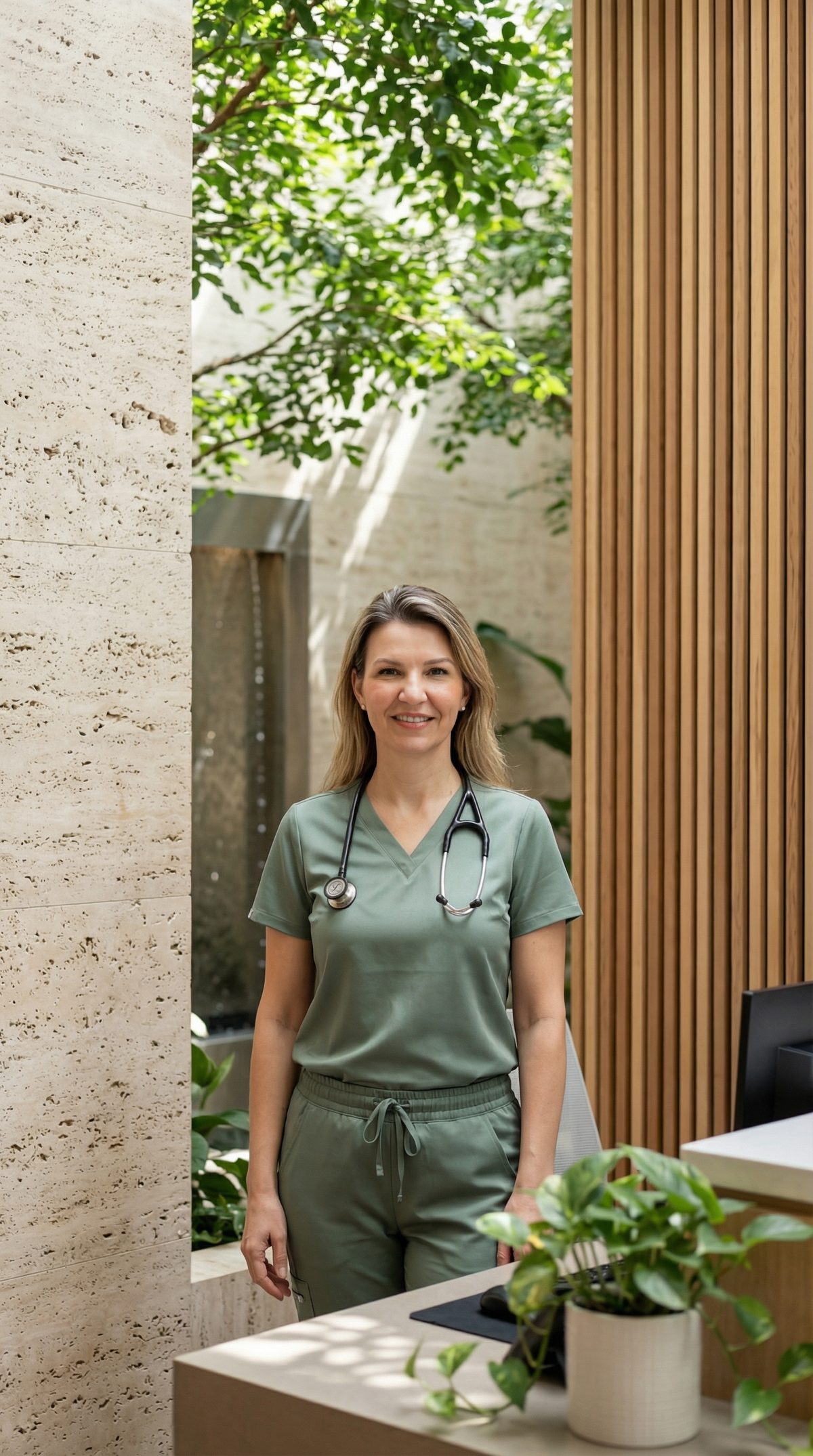
From Anesthesiology to Internal Medicine: An Unusual Path
When patients visit me at the Kelsey-Seybold Clinic in Sugar Land, they often expect a standard medical history review. We talk about blood pressure, managing diabetes, or that nagging cough that will not go away. However, during our conversations, when I share details about my medical background, eyebrows often raise in surprise. My career did not begin in the clinic. It began in the operating room.
Making the transition from anesthesiology to internal medicine is considered an unusual path in the medical community. Most physicians pick a lane early in their careers and stay there. Yet, looking back at my years of training and practice, I view this evolution not as a change of heart, but as a necessary expansion of how I care for human beings.
As Dr. Vuslat Muslu Erdem, I want to share why I traded the sterile silence of the operating theater for the vibrant, ongoing conversations of the exam room, and how my background in anesthesia makes me a more thorough, vigilant, and comprehensive Internal Medicine physician today.
The Operating Room vs. The Exam Room
To understand my journey, you have to understand the fundamental difference between these two worlds.
In anesthesiology, the focus is intense, immediate, and physiological. You are the guardian of a patient’s life functions while they are most vulnerable. You monitor heart rate, oxygen saturation, and blood pressure second by second. You master pharmacology, understanding exactly how drugs interact with the body to block pain and maintain stability. My early research, including publications on the effects of various anesthetic agents, was deeply rooted in this acute, high-stakes environment.
However, there was one element missing for me in the operating room: the person behind the patient.
As an anesthesiologist, my interaction with a patient was often limited to a few minutes before surgery and a brief check-in during recovery. I did not get to know their families. I did not get to see them improve over months or years. I did not get to help them prevent the surgery in the first place.
I realized that while I loved the science of medicine, my true calling lay in the art of it: the long-term relationships and the puzzle-solving nature of primary care. I wanted to be the doctor who manages the hypertension so a patient never needs cardiac surgery, rather than the doctor managing the anesthesia during it.
How Anesthesia Expertise Enhances Primary Care
Patients sometimes ask if my previous experience is wasted now that I practice primary care. The answer is no. My journey from anesthesiology to internal medicine equipped me with a unique toolkit that benefits my patients every day.
Mastery of Pharmacology and Polypharmacy
Anesthesiologists are, at their core, clinical pharmacologists. We know exactly how medications interact, how they are metabolized by the liver and kidneys, and what side effects to anticipate. In Internal Medicine, particularly when treating older adults or patients with complex chronic conditions, polypharmacy (taking multiple medications simultaneously) is a major challenge. Because of my background, I look at a patient’s medication list with a critical eye. I am deeply familiar with drug interactions that might cause dizziness, fatigue, or metabolic changes. My goal is always to optimize your treatment. Sometimes, the best medicine is de-prescribing medications you no longer need.
A Deep Understanding of Cardiopulmonary Physiology
In the operating room, you see exactly how the heart and lungs react to stress. You see the direct impact of uncontrolled high blood pressure or undiagnosed sleep apnea on the body’s ability to function. When I treat a patient for hypertension or asthma now, I am not just following a flowchart. I have a visual and practical understanding of the strain these conditions place on your organs. This experience drives me to be proactive in managing chronic conditions early, and it allows me to explain why we need to control your blood pressure in a way that is grounded in deep physiological knowledge, not just textbook theory.
The Surgical Clearance Expert
One of the most stressful times for a patient is preparing for surgery. Surgeons often send patients to their internist for pre-operative clearance. Because I have stood on the other side of the drape, I know exactly what the anesthesiologist and surgeon are concerned about. I know what makes a patient high risk for anesthesia. When I perform a pre-operative evaluation, I am checking for the specific markers that ensure your safety during the procedure. I can also explain the process to you, what to expect in the holding area, how the anesthesia works, and what recovery looks like, with the authority of someone who has administered it. This helps alleviate anxiety, which is itself a meaningful part of patient care.
Critical Thinking in Ambiguity
Anesthesia trains you to make decisions with incomplete information. In internal medicine, we frequently diagnose based on patterns before definitive tests return. I am comfortable with that uncertainty and know how to act safely while pursuing answers. This translates into confident, calm care even when the clinical picture is still developing.
The Shift to Preventive Medicine
The most rewarding aspect of moving from anesthesiology to internal medicine is the ability to practice preventive care. In the operating room, we are often reacting to a problem that has already advanced to a critical stage. In my clinic, we have the power to intervene before the scalpel is ever necessary.
Managing Chronic Conditions
My practice focuses on the management of chronic illnesses such as diabetes and hypertension. These are the conditions that, if left unchecked, lead to the surgeries I used to attend. Current guidelines emphasize that diabetes management is not just about blood sugar. It is about cardiovascular protection and kidney health. We now have medications that protect the heart and kidneys while lowering glucose. My approach is holistic. We discuss nutrition, not just eating less but eating for metabolic health. We talk about finding movement that fits your lifestyle. We use technology to keep track of your vitals between visits.
The Diagnostic Detective
Internal medicine is often compared to detective work. Patients come in with undifferentiated symptoms: fatigue, vague pain, weight changes. In anesthesia, the variables are controlled. In primary care, the variables are infinite. I find deep satisfaction in this diagnostic process. Taking a thorough history, piecing together lab results, and listening to the patient’s story allows us to uncover the root cause of the issue.
A Partner in Your Health Journey
Transitioning to Internal Medicine has also allowed me to integrate my personal interests into my professional advice. Outside of the clinic, I enjoy cooking and practicing yoga. These are not just hobbies. They are extensions of a healthy lifestyle that I advocate for my patients.
Yoga teaches mindfulness and stress reduction. We know that chronic stress elevates cortisol levels, which can worsen diabetes and high blood pressure. When I counsel patients, I discuss stress management techniques alongside medication. I understand that health is not just numbers on a chart. It is how you feel when you wake up in the morning.
Actionable Advice: Maximizing Your Internal Medicine Visit
Whether you are seeing Dr. V or another provider, getting the most out of your primary care visit is important. Here are tips drawn from my experience in both acute and chronic care.
Bring your data. Just as an anesthesiologist monitors trends, your internist needs data. If you have a blood pressure cuff at home, keep a log for a week before your visit. If you have diabetes, bring your glucometer or continuous glucose monitor readings. White coat hypertension, the blood pressure spike caused by the stress of being in a doctor’s office, is real. Home data helps us treat the real you, not the stressed you.
Be honest about all substances. Because of my anesthesia background, I know how supplements, alcohol, and over-the-counter drugs affect the body. List everything you take, including herbal teas, vitamins, and occasional pain relievers. They can interact with prescription medications in unexpected ways.
Ask “why” and “how.” Do not just take a prescription and leave. Ask why we are choosing this medication, how it works, and what our goal is for the next three to six months. I appreciate when patients ask these questions because it means they are engaged partners in their health.
Focus on prevention as a daily practice. Internal medicine is about the long game. Small, consistent choices, a ten-minute walk, a handful of nuts instead of chips, a consistent sleep schedule, are the most powerful interventions I can recommend.
Looking Forward
My path from anesthesiology to internal medicine was a journey from the specific to the general, from the acute to the chronic, and from the unconscious to the conscious. It was a journey toward connection.
I am dedicated to using every aspect of my training, the precision of an anesthesiologist and the investigative nature of an internist, to provide the highest standard of care. Whether you need a routine physical, management for a complex condition, or guidance on preventive health, I am here to help you navigate your health journey with clarity and compassion.
If you are looking for a primary care physician who looks at the whole picture, I invite you to visit me at the Kelsey-Seybold Fort Bend Campus. Let us work together to keep you healthy, active, and out of the operating room.
—
Medical Disclaimer: This article is for informational purposes only and does not constitute medical advice. Always consult with a qualified healthcare provider for personalized medical guidance. To schedule an appointment with Dr. Vuslat Muslu Erdem, call (713) 442-9100.